Introduction: The Growing Need for Sustainable Urban Water Management
Urbanization is rapidly increasing across the globe, leading to higher demands on city infrastructure. One of the most pressing challenges in modern urban planning is managing stormwater effectively. As cities expand, natural water cycles are disrupted, leading to increased runoff, flooding, and pollution. Effective stormwater management solutions are crucial to maintaining healthy ecosystems and ensuring the resilience of urban environments.
Stormwater management plays a critical role in creating sustainable cities by controlling excess water, reducing flood risks, and improving water quality. It also helps cities comply with environmental regulations and contributes to the overall well-being of urban populations. This blog explores the importance of stormwater management in urban infrastructure projects and presents sustainable solutions that can be integrated into city planning.
The Challenges of Urban Stormwater Management
Urban environments face numerous challenges when it comes to stormwater management:
-
Increased Runoff: Urbanization often leads to the replacement of permeable surfaces (such as soil and grass) with impervious surfaces like roads, parking lots, and buildings. This reduces the natural infiltration of rainwater into the ground, causing more runoff and overwhelming traditional drainage systems.
-
Flooding: Heavy rainfall, coupled with poorly designed or outdated drainage systems, can result in localized flooding, damaging property, infrastructure, and the environment.
-
Water Pollution: Stormwater runoff can carry pollutants like oil, chemicals, trash, and sediments into rivers and lakes, negatively affecting water quality and aquatic ecosystems.
-
Climate Change Impact: Extreme weather events, including heavy rains and storms, are becoming more frequent due to climate change. Cities must adapt their infrastructure to handle these changes effectively.
To address these challenges, it is essential to adopt sustainable stormwater management practices that enhance infrastructure resilience and protect the environment.
Sustainable Stormwater Management Solutions for Urban Infrastructure
Implementing sustainable stormwater management systems can mitigate the negative effects of urban runoff while improving water quality and infrastructure resilience. Below are some key solutions that can be integrated into urban infrastructure projects:
1. Infiltration Systems: Capturing and Reusing Water
Infiltration systems are designed to capture stormwater runoff and allow it to seep into the ground, recharging groundwater supplies and preventing runoff from entering drains. These systems help reduce the burden on drainage networks and provide a natural method of managing water.
Key benefits of infiltration systems:
-
Improved groundwater recharge: Helps replenish underground water supplies, ensuring long-term water availability.
-
Reduced surface runoff: By allowing water to infiltrate into the ground, the system reduces the risk of flooding and waterlogging.
-
Eco-friendly: Infiltration systems promote environmental sustainability by mimicking natural water cycles.
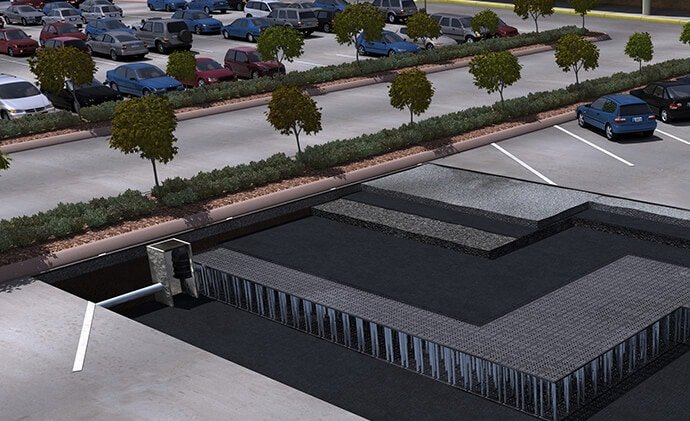
Products such as infiltration tunnels are ideal for managing stormwater in areas with limited space for traditional ponds or detention basins. These systems can be installed beneath roads or pavements, providing an efficient solution for urban areas.
2. Stormwater Attenuation Tanks: Managing Excess Water
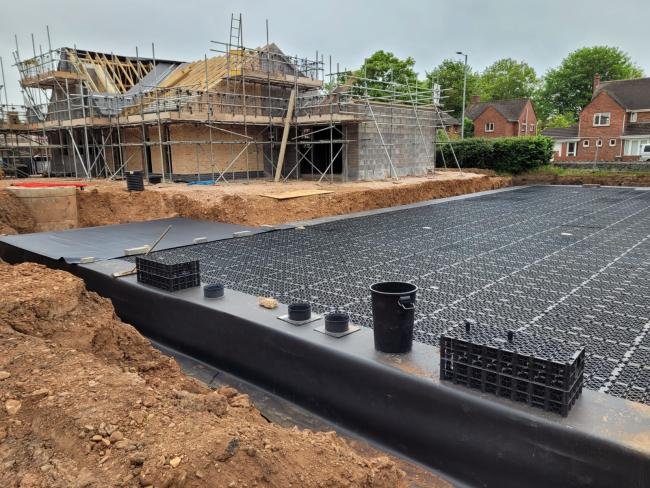
Stormwater attenuation tanks are large underground systems designed to temporarily store stormwater during heavy rainfall events. The water is gradually released into the drainage system or infiltration areas, preventing flooding and reducing pressure on the local infrastructure.
Key benefits of attenuation tanks:
-
Flood prevention: By storing excess water during storms, attenuation tanks help prevent localized flooding and protect critical infrastructure.
-
Optimized drainage: These tanks help manage flow rates, ensuring that stormwater is released at a controlled rate to avoid overloading drainage systems.
-
Space-saving solution: Attenuation tanks can be installed underground, making them ideal for urban environments where space is limited.
EngXDoc’s attenuation systems provide a reliable solution for cities looking to manage stormwater efficiently while protecting against flood risks.
3. Green Infrastructure: Integrating Nature into Urban Design
Green infrastructure refers to using natural systems to manage stormwater. This approach includes solutions such as green roofs, permeable pavements, rain gardens, and vegetated swales that capture, store, and filter rainwater before it reaches the drainage system.
Key benefits of green infrastructure:
-
Stormwater absorption: Vegetated systems can absorb and retain significant amounts of water, reducing runoff and improving water quality.
-
Enhancing urban aesthetics: Green infrastructure not only helps manage stormwater but also enhances the visual appeal and livability of urban spaces.
-
Biodiversity promotion: Green solutions provide habitats for plants and animals, contributing to urban biodiversity.
Green infrastructure works hand-in-hand with traditional engineered solutions to create a more resilient and sustainable urban environment.
4. Sustainable Drainage Systems (SuDS): A Holistic Approach
Sustainable Drainage Systems (SuDS) are a comprehensive approach to managing stormwater that focuses on reducing runoff, improving water quality, and integrating stormwater management into the urban landscape. SuDS combine multiple techniques, including infiltration, attenuation, and green infrastructure, to effectively manage stormwater.
Key benefits of SuDS:
-
Multi-functionality: SuDS are designed to provide multiple environmental benefits, such as flood prevention, water quality improvement, and habitat creation.
-
Flexibility: SuDS can be tailored to suit different urban environments, from residential areas to commercial districts.
-
Long-term cost savings: By reducing the need for expensive drainage infrastructure, SuDS offer a cost-effective solution for managing stormwater.
Case Study: Implementing Sustainable Stormwater Solutions
Let’s look at an example of a successful project where EngXDoc’s solutions were implemented:
In a recent urban redevelopment project in Berlin, a combination of infiltration tunnels and stormwater attenuation tanks was used to manage excess water during heavy rainfall events. The green infrastructure elements, including rain gardens and permeable pavements, were incorporated to reduce runoff and improve the city’s environmental footprint.
This project has not only improved the city’s flood resilience but has also contributed to the reduction of stormwater pollution, making the city more sustainable and adaptable to future climate challenges.
The Future of Urban Stormwater Management
As cities continue to grow, the need for innovative and sustainable stormwater management solutions will only increase. The integration of advanced technologies, such as smart stormwater systems and real-time monitoring, will help cities respond more effectively to stormwater challenges.
At EngXDoc, we are committed to providing cutting-edge solutions that help cities manage stormwater in a way that is both environmentally responsible and cost-effective. Our products, such as infiltration tunnels, attenuation tanks, and green infrastructure solutions, are designed to create more resilient cities that are ready for the challenges of tomorrow.
Conclusion: The Importance of Sustainable Stormwater Management
Effective stormwater management is crucial to building resilient, sustainable cities. By adopting solutions such as infiltration systems, attenuation tanks, and green infrastructure, cities can reduce flood risks, improve water quality, and promote environmental sustainability.
EngXDoc offers reliable, cutting-edge solutions to help cities and developers manage stormwater effectively. Contact us today to learn how we can help you design and implement the best stormwater management systems for your next project.
Call to Action:
Interested in learning more about our stormwater management solutions?
Contact Us today to discuss how we can help you improve your urban infrastructure with sustainable stormwater solutions.
Recent Comments